Blast Radius in Software Engineering: Meaning, Examples & Analysis
See how blast radius analysis traces services, dependencies, owners, and affected customers before a software or infrastructure change ships.
By Craig Tracey ·

In software engineering, blast radius is everything a change or failure can affect: the services that call the changed component, the services that depend on those, and the customers, teams, and revenue behind them. Blast radius analysis is the practice of mapping that set before you ship, so you know what will break and who will notice. The smaller and better understood the blast radius, the safer the change.
Imagine you are on the auth team and you need to add a user_roles field to the auth API response. Straightforward change. You write the code, the tests pass, the PR looks clean. Ship it.
Except your auth API has 45 downstream consumers. Twelve services depend on it directly. Twenty-three more depend on those twelve. And buried in that dependency graph are two facts that will determine whether your Friday afternoon deploy becomes a weekend-long incident.
The iOS and Android apps use strict deserialization. When they encounter a new required field they do not expect, they crash. Not degrade gracefully. Crash. The admin portal uses strict TypeScript interfaces, so its next build will fail the moment it pulls the updated API client. Meanwhile, the payment service uses flexible JSON parsing and will happily ignore the new field.
The fix is simple: make the field optional, not required. But you cannot apply that fix if you do not know the problem exists. And you cannot know the problem exists unless you can see the full blast radius of your change.
The Structural Visibility Gap
This is not a contrived scenario. It is a routine API change, the kind that happens weekly at any organization with a service-oriented architecture. The eng who writes the change understands their service. They may even know the primary consumers. What they almost never understand is the full graph of downstream dependents, their parsing behavior, their deployment cadences, and their failure modes.
Enterprises have built systems of record for nearly everything that matters: financials, inventory, customer data, source code. But they have never had a system of relationships. Service catalogs can tell you what exists and who owns it. Some offer partial dependency tracking. But none reliably answer "what breaks if it changes" because the full dependency graph spans systems no single catalog touches.
That gap is where breaking changes live.
Why Static Analysis Falls Short
Many organizations try to close this gap with static analysis. Parse the Terraform files, read the Kubernetes manifests, scan the CI configs. This is a reasonable starting point, but it breaks down for three reasons.
First, static analysis captures declared dependencies, not actual dependencies. A service might declare a database connection in its Helm chart while also making undeclared HTTP calls to three other services via environment variables injected at runtime. Static analysis sees the database. It misses the HTTP calls.
Second, static analysis produces a snapshot. Infrastructure changes constantly. New services come online, old ones get forgotten, traffic patterns shift. A dependency graph from last week's Terraform state may already be stale.
Third, static analysis cannot capture cross-domain relationships. Your Kubernetes deployments live in one system, your API contracts in another, your mobile app build configurations in a third. Each tool knows its own domain. None of them know how those domains connect. That is why the auth API scenario is so insidious: the critical detail (mobile apps use strict deserialization) lives in a completely different domain than the API change itself.
Following the Graph
Now consider a different kind of change: renaming a database column from user_id to customer_id. It sounds like a simple refactor. When you trace the blast radius through a live dependency graph, the actual scope is staggering: 22 database objects (views, stored procedures, triggers), 12 microservices containing 187 SQL queries that reference the column, 18 ETL pipelines, and 47 BI dashboards. Over 500 locations in total.
No engineer is going to find all 500 of those by grepping. The information is spread across database schemas, application code, pipeline definitions, and dashboard configurations, each managed by a different team using different tools.
Both of these examples share the same structural problem. The data needed to assess blast radius exists, but it is scattered across systems that do not talk to each other. The auth API's consumer graph is distributed across service mesh configurations, mobile build systems, and API gateway routing rules. The database column's usage spans SQL servers, application ORMs, Airflow DAGs, and Tableau workbooks.
Making Blast Radius a CI Check
The time to discover blast radius is before the change ships, not during the incident review. This means blast radius analysis needs to be fast enough to run on every PR, complete enough to be trustworthy, and current enough to reflect the actual state of production.
Here is what that looks like in practice for the auth API change. At PR time, the engineer sees: "This change affects 35 downstream services. 2 services (ios-app, android-app) use strict deserialization and will crash if user_roles is a required field. 1 service (admin-portal) uses strict TypeScript interfaces and will fail to build. Recommendation: make user_roles optional."
That is not a hypothetical output. It is the kind of answer you get when you have a live dependency graph that knows not just which services consume the auth API, but how they consume it.
The Revenue Blast Radius
The dependency chain does not stop at the service boundary. A delayed capability can block an opportunity. An incident can affect accounts renewing this quarter. A broken billing path can expose contracted ARR. Once accounts, opportunities, services, issues, and owners share the same graph, engineering can see which customers are downstream and RevOps can see which parts of the forecast depend on unresolved work.
That is the same question from two directions: engineering asks what a change will affect; revenue asks which forecast commitments depend on engineering work that slipped.
Building Blast Radius Into Your Workflow
If you want to start incorporating blast radius analysis today, here are concrete steps regardless of tooling.
Inventory your dependency sources. Service meshes, DNS, database connection strings, message queues, API gateways, IAM policies. Each is a source of relationship data. You cannot analyze what you have not cataloged.
Distinguish declared from discovered dependencies. Declared dependencies are what your config files say. Discovered dependencies are what your runtime telemetry reveals. Prefer discovered when they conflict.
Map consumer behavior, not just consumer existence. Knowing that the iOS app calls your API is useful. Knowing that it uses strict deserialization is the detail that prevents the outage. Dependency graphs need to capture how systems connect, not just that they connect.
Make it a gate, not a report. A blast radius report that nobody reads is worthless. Surface it in the PR, make it part of the review process, and flag high-risk changes for additional scrutiny.
This is the core problem SixDegree was built to solve. It continuously discovers infrastructure entities and their relationships across every layer of the stack (cloud resources, Kubernetes workloads, repositories, CI/CD pipelines, databases, API contracts) and maintains a live ontology that can answer blast radius queries in seconds. When the auth team opens a PR to add user_roles, SixDegree can show them the 35 affected services and flag the ones that will break, before the change ever reaches production.
The People Blast Radius
Blast radius is not just an infrastructure concept. It applies to people too.
What happens if Mary leaves the company? Mary is the only person who understands the legacy auth system. She handles 52% of her team's incidents and 49% of after-hours work. She has not taken vacation in five months.
Mary's blast radius is every service that depends on the auth system, every incident that requires auth knowledge, every on-call rotation she anchors, and every new hire she onboards. When Mary leaves (and she will, because this workload is not sustainable), the organization faces months of degraded incident response, slower onboarding, and accumulated risk in a system nobody else fully understands.
The direct cost of Mary's departure is significant: recruiting, onboarding, lost productivity. But the real cost is the blast radius: all the teams and systems that depended on Mary's knowledge, now operating without it.
If you can map the blast radius of a code change, you can map the blast radius of a person. Which services does Mary own? What tribal knowledge does she hold exclusively? Which teams depend on her for incident response? The answers tell you where to invest in knowledge distribution before the departure happens, not after.
The Takeaway
Blast radius analysis is not a nice-to-have. It is the difference between a controlled change and an uncontrolled experiment, whether that change is a deploy, a database migration, or a resignation.
The auth API example is mundane by design. It is not a dramatic infrastructure failure. It is a Tuesday. That is exactly why it matters. The changes that cause the most aggregate damage are not the big, scary ones that get extra scrutiny. They are the small, routine ones that nobody thinks to question.
Frequently Asked Questions
What does blast radius mean in software and infrastructure?
Blast radius is the full set of downstream systems, services, and people affected when something changes or fails. A single API or infrastructure change can span the services that consume it directly, their transitive dependents, and the data pipelines, dashboards, and teams further down the dependency graph. A change that looks isolated often touches dozens or hundreds of places.
What is blast radius analysis?
Blast radius analysis maps the downstream impact of a change before it ships. It traces a live dependency graph to identify every affected service, database object, pipeline, and dashboard, and how each one will react. That turns a guess about what might break into a concrete list you can act on at pull-request time.
What is an example of blast radius?
Adding a required field to a shared auth API is a common one. The payment service ignores the new field, but mobile apps with strict deserialization crash and an admin portal with strict TypeScript types fails its next build. The blast radius is those apps, the teams that own them, and the customers using them, not just the auth service that changed.
How do you reduce blast radius?
Make changes backward compatible (optional fields, versioned APIs), roll out behind feature flags or canaries, and isolate failures with cell-based or per-tenant deployments. None of these work well unless you can first see the dependency graph, which is why blast radius and customer impact analysis comes before mitigation.
Why can't Terraform or static analysis measure blast radius?
Static analysis of Terraform, Kubernetes manifests, and CI configs captures declared dependencies, not actual ones. It produces a stale snapshot, and it cannot see across domains. A service may declare a database in its Helm chart while making undeclared runtime HTTP calls to other services: static analysis sees the database and misses the calls.
How do you add blast radius analysis to your workflow?
Inventory your dependency sources, including service meshes, DNS, databases, message queues, API gateways, and IAM policies. Prefer discovered dependencies over declared ones, map how consumers connect rather than just that they connect, and make the result a gate in the pull request instead of a report nobody reads.
Trace the change all the way to the customer.
Bring one dependency, incident, or delivery question. We will map the systems behind it and show how the answer connects to affected accounts, renewals, and forecast risk.
Keep reading
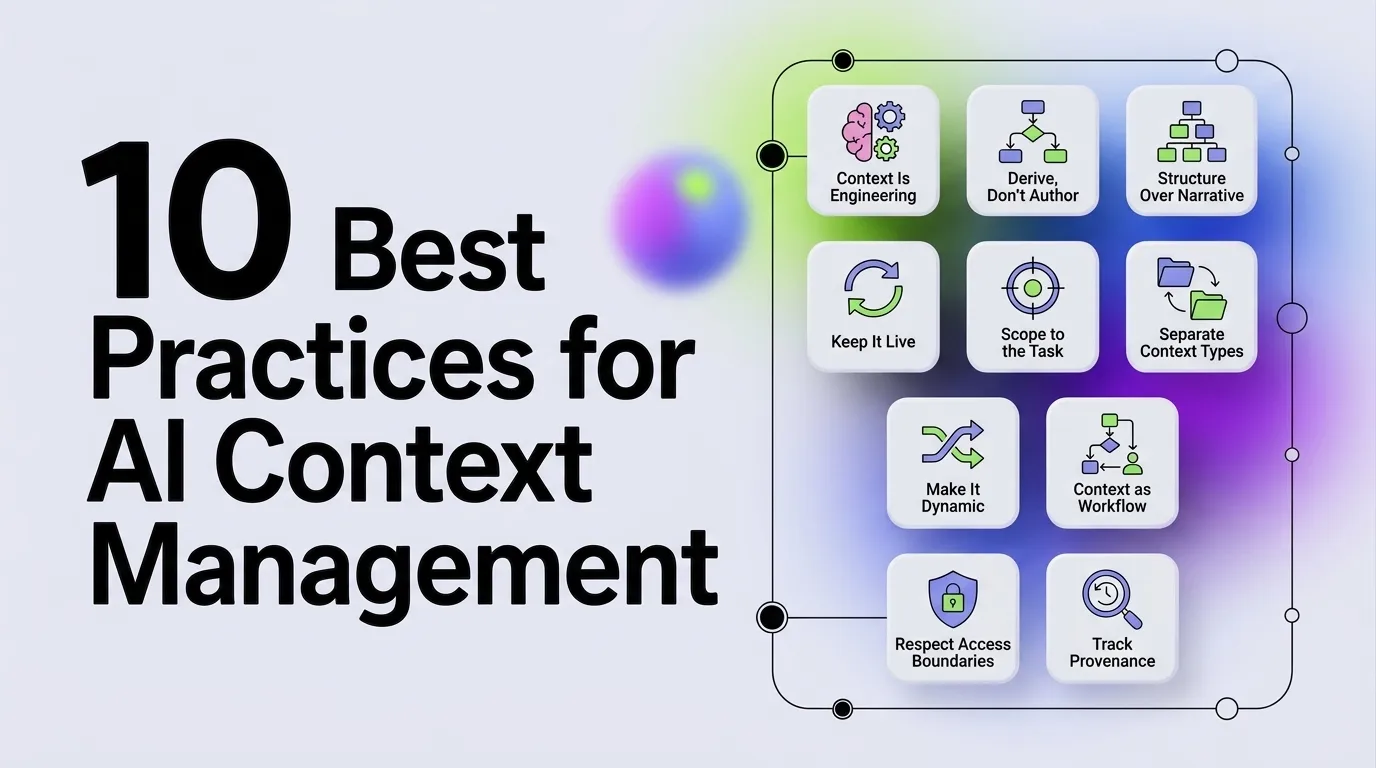
10 Best Practices for AI Context Management
Most teams managing AI context are using markdown files. Here's what better looks like.
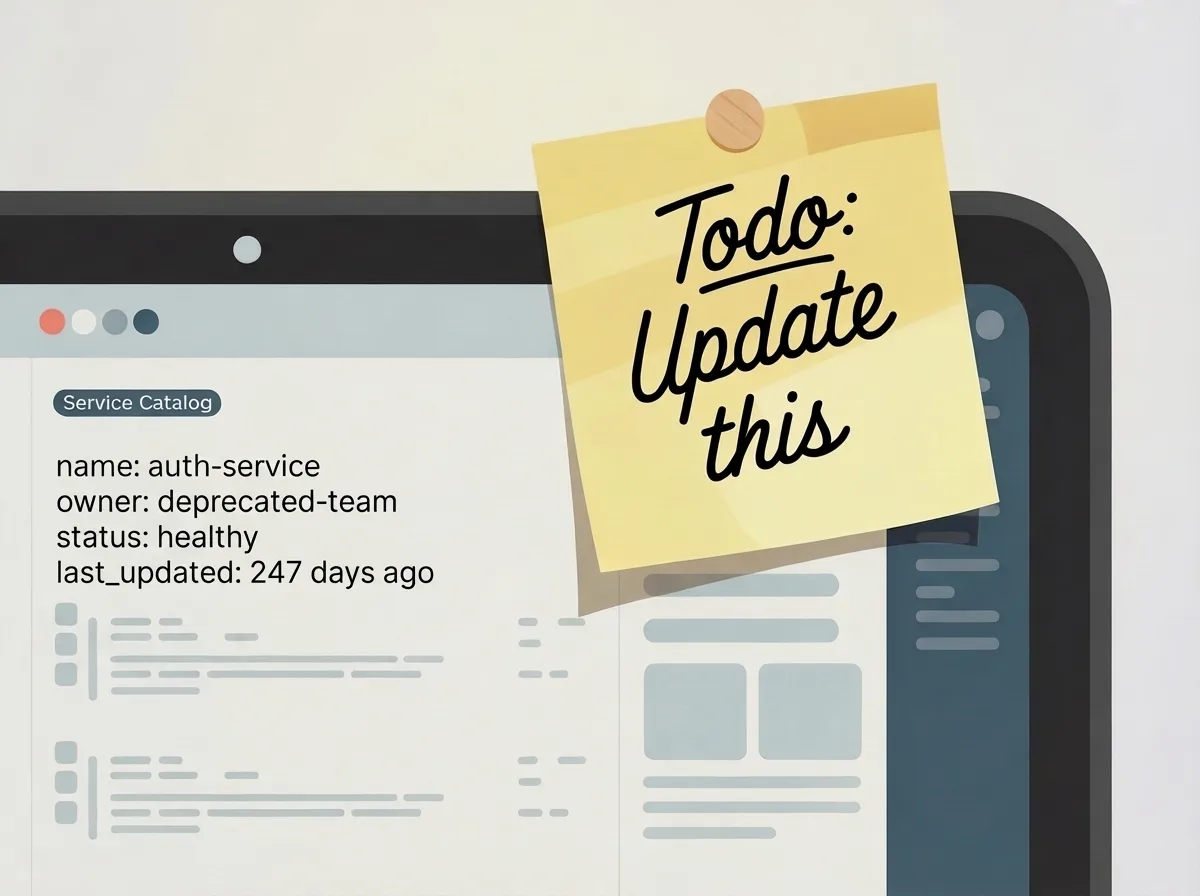
The Service Catalog Problem Isn't Backstage. It's the Catalog.
Backstage is hard to run and Cortex and OpsLevel made it easier. None of them changed what a catalog is: a human-authored approximation that drifts.
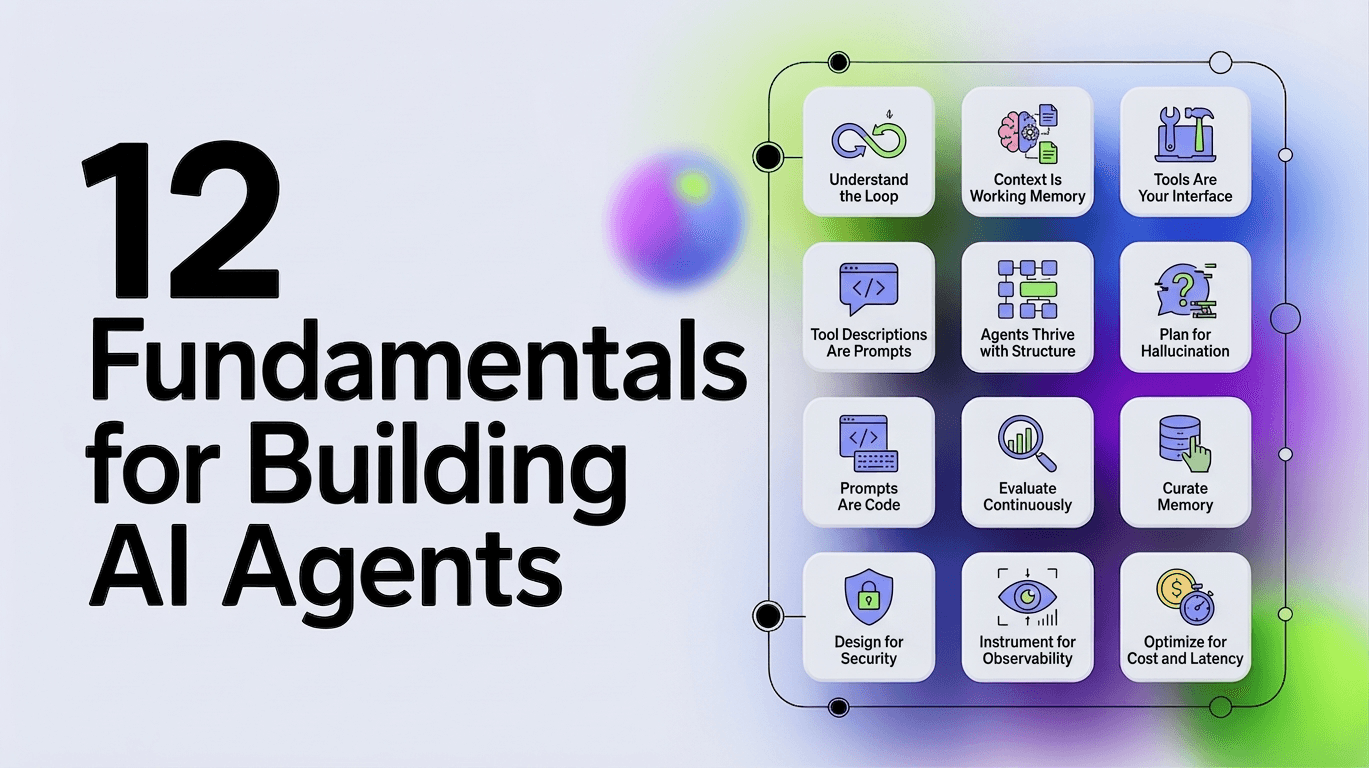
Building AI Agents: The Fundamentals
Twelve rules for building AI agents that actually work. What agents are, how the agentic loop works, and the mental models that matter.