What Your CRM Can't Tell You About a Deal at Risk
Your CRM tracks the deal. It cannot see the support tickets, the usage drop, or the AE who went quiet. Deal risk lives between your systems.
By Craig Tracey ·

Your CRM says the Meridian deal is healthy. Stage: negotiation. Close date: end of quarter. Probability: 80%. The forecast looks fine.
Then it churns, and everyone's surprised.
It shouldn't have been. The signs were all there. The support tickets had been piling up for three weeks. Product usage fell off a cliff in April. The champion changed jobs. The last real email from the AE was nineteen days ago. Every one of those was a flashing light. None of them was in the CRM, which is the gap revenue risk intelligence exists to close.
That's the thing about deal risk. It almost never lives in the CRM. It lives between your systems.
The CRM records. It doesn't watch.
A CRM is a system of record. Someone updates the stage, logs a call, sets a close date. It's only as current as the last time a human touched it, and people update the CRM when it's convenient, not when reality changes. So the field says 80% because nobody moved it, not because the deal is actually at 80%.
Meanwhile the truth is scattered across the systems that update themselves. The helpdesk knows the tickets are escalating. The product knows logins dropped. Billing knows the last invoice was late. Your email and call tools know who's gone quiet. Each one holds a piece. None of them talks to the others.
Deal risk is a join
The reason no single tool catches it is that risk is a join, not a field. It's the support load and the usage trend and the comms gap and the renewal date, looked at together, for the same account. Any one of those alone is noise. Together they're a churn signal you could act on a month early.
Your RevOps team knows this. It's why a good ops person spends half their week pulling exports from five systems into a spreadsheet to build the picture by hand. That picture is exactly right and exactly stale, because by the time it's built, the data has moved.
What it looks like when the systems are connected
Now picture the same accounts on a live operational graph. Every system feeding it continuously. The same customer resolved to one identity whether they show up in Salesforce, Zendesk, or Stripe.
Ask it: which deals in this quarter's forecast have a risk signal the CRM doesn't show. You get back three. One has tickets escalating against a flat usage curve. One hasn't had outbound contact in three weeks while sitting in active renewal. One's invoice slipped and the champion's email is bouncing. Each comes back with the deal size, the owner, and the underlying signals attached.
That's not a report someone built overnight. It's a question answered against live state, the moment you ask it.
This is what "AI for RevOps" should mean
A lot of AI in the revenue stack is summarizing calls and drafting follow-ups. Useful, but it's working off the same siloed view your team already has. The win isn't writing the email faster. It's knowing which account needs one before it's too late.
That takes operational context: the live, connected state of every account across every system it touches. Not a better CRM field. The picture between the fields.
Your forecast is only as honest as the signals feeding it. Right now most of those signals sit in systems your CRM can't see, going stale in spreadsheets, or not getting looked at until the QBR. Connect them, and the deal at risk stops being a surprise. It becomes a question you can ask, and an answer you can act on, while there's still time to save it.
Questions revenue teams ask
- Which Commit deals have an open P1 or declining usage?
- Which opportunities lost a champion this month?
- Which close plans depend on engineering work that slipped?
- Which best-case deals no longer have evidence supporting that category?
See the complete Salesforce forecast risk workflow, including the source signals and the board-ready result.
Bring one deal question the CRM cannot answer.
We will connect the systems behind it and show the support, usage, billing, relationship, and delivery evidence attached to the account.
Keep reading

Same silo, new interface
SaaS spent 20 years selling silos. Agents and MCP finally give us a way out, and the incumbents are pulling everything back into their own box. The silo was never the database. It was the meaning.

Your agent broke something. Now what?
A practical guide to running an AI agent postmortem: what evidence to capture, a worked renewal example, a checklist, and the false roots that waste the review.
The escalation your renewal forecast cannot see
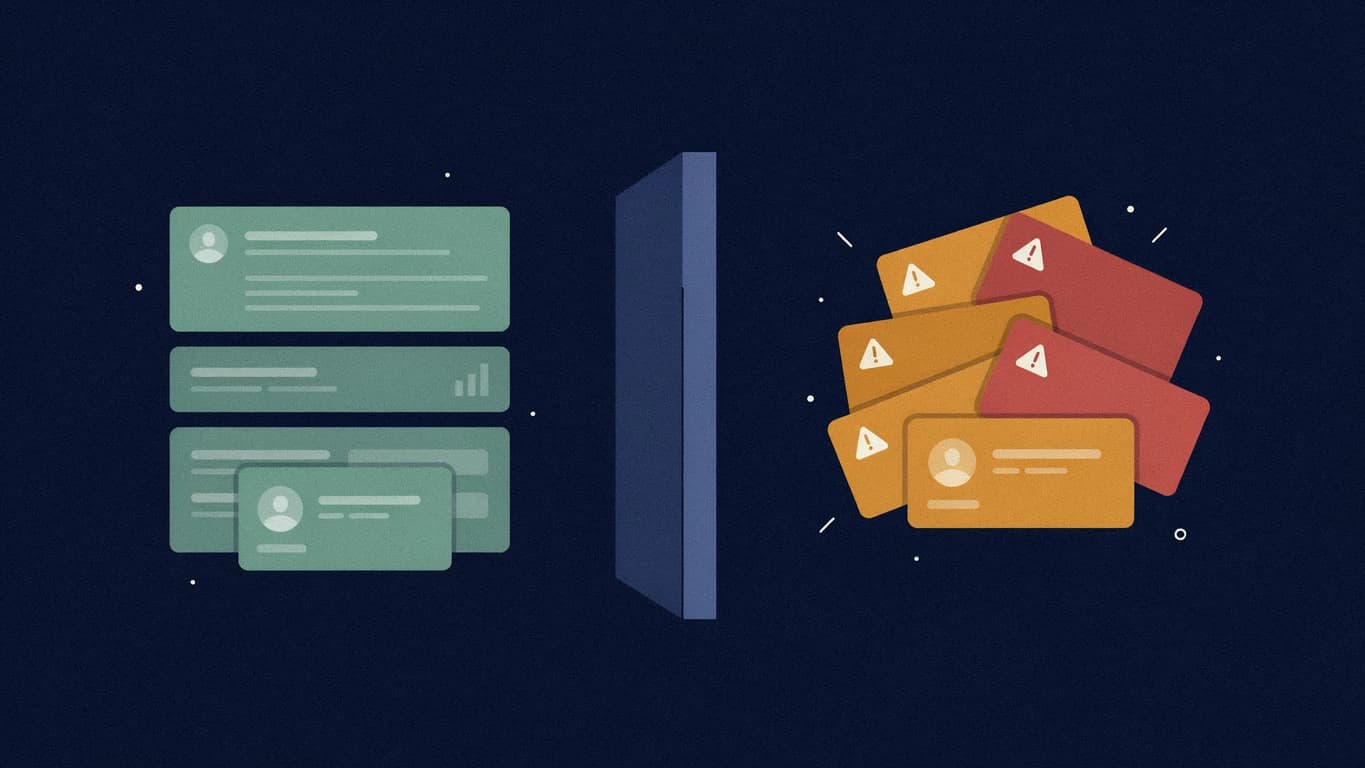
Support knows the account is unhappy. The forecast does not. The two systems hold the same customer under different identifiers and never compare notes.