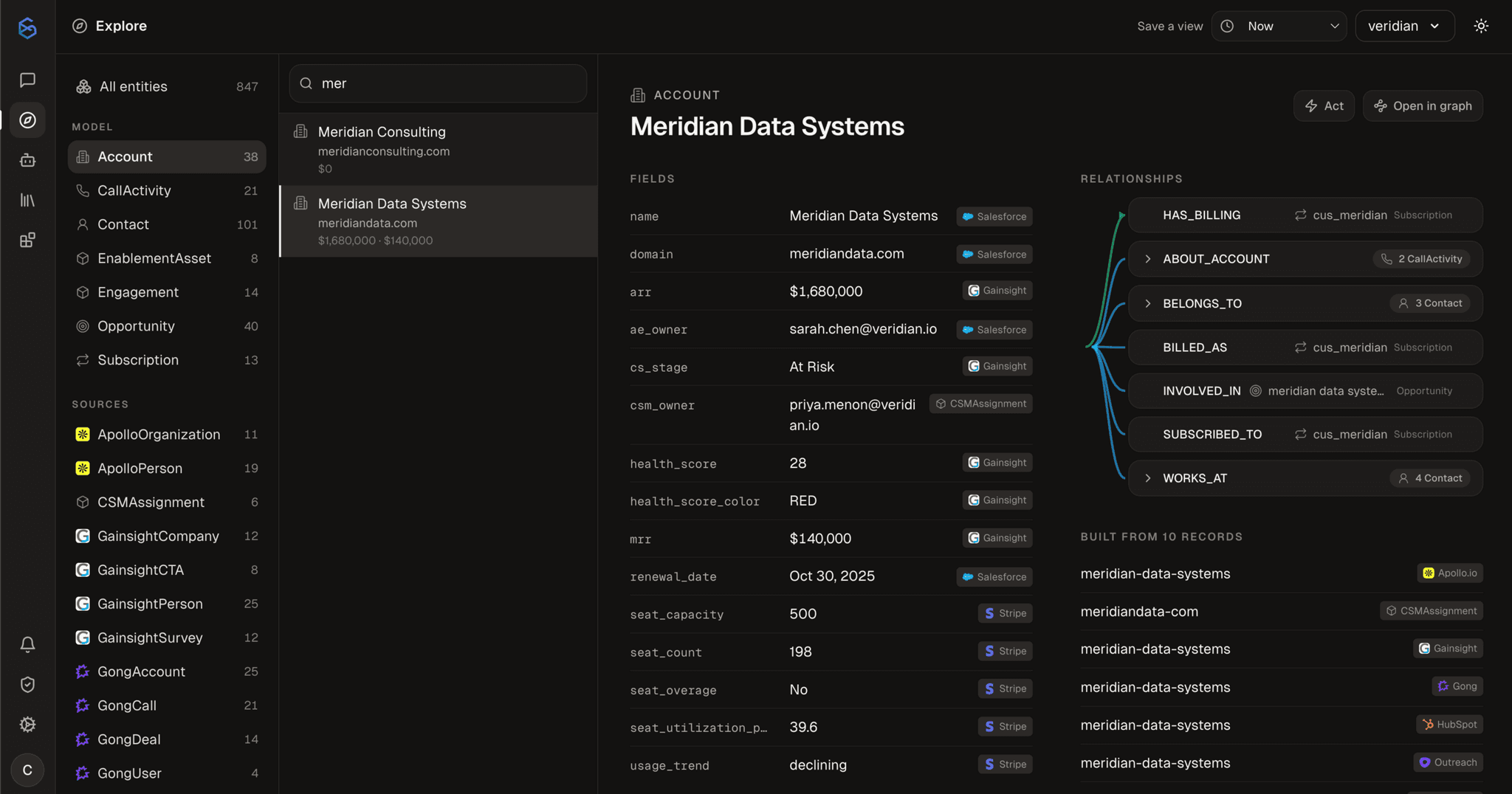
How to build a customer health score teams can trust.
There is no universal health-score formula. A useful model reflects how your customers receive value, renew, expand, and encounter risk, then makes every component explainable.
Choose evidence tied to customer outcomes
Common inputs include product adoption, active-seat ratio, support severity and age, invoice state, relationship coverage, executive engagement, implementation progress, renewal date, and contractual commitments. Use signals that can change an action, not fields that are merely available.
Normalize before weighting
Convert inputs measured on different scales into a consistent range, then weight them by their relationship to retention or expansion. A simple model can calculate health as the sum of each normalized signal multiplied by its weight.
Keep hard-stop conditions outside the weighted average. An unresolved critical incident or failed payment should not disappear because several low-value indicators are green.
Score change as well as state
A stable customer at 65 may be healthier than a customer that fell from 90 to 72 in two weeks. Preserve the prior score, current score, component changes, and observed times so the team can distinguish baseline from deterioration.
Expose disagreement instead of averaging it away
CRM, customer success, product, and support may reach different conclusions about the same account. Show those claims beside the evidence that produced them. The disagreement is a review queue, not a data-cleaning error to hide.