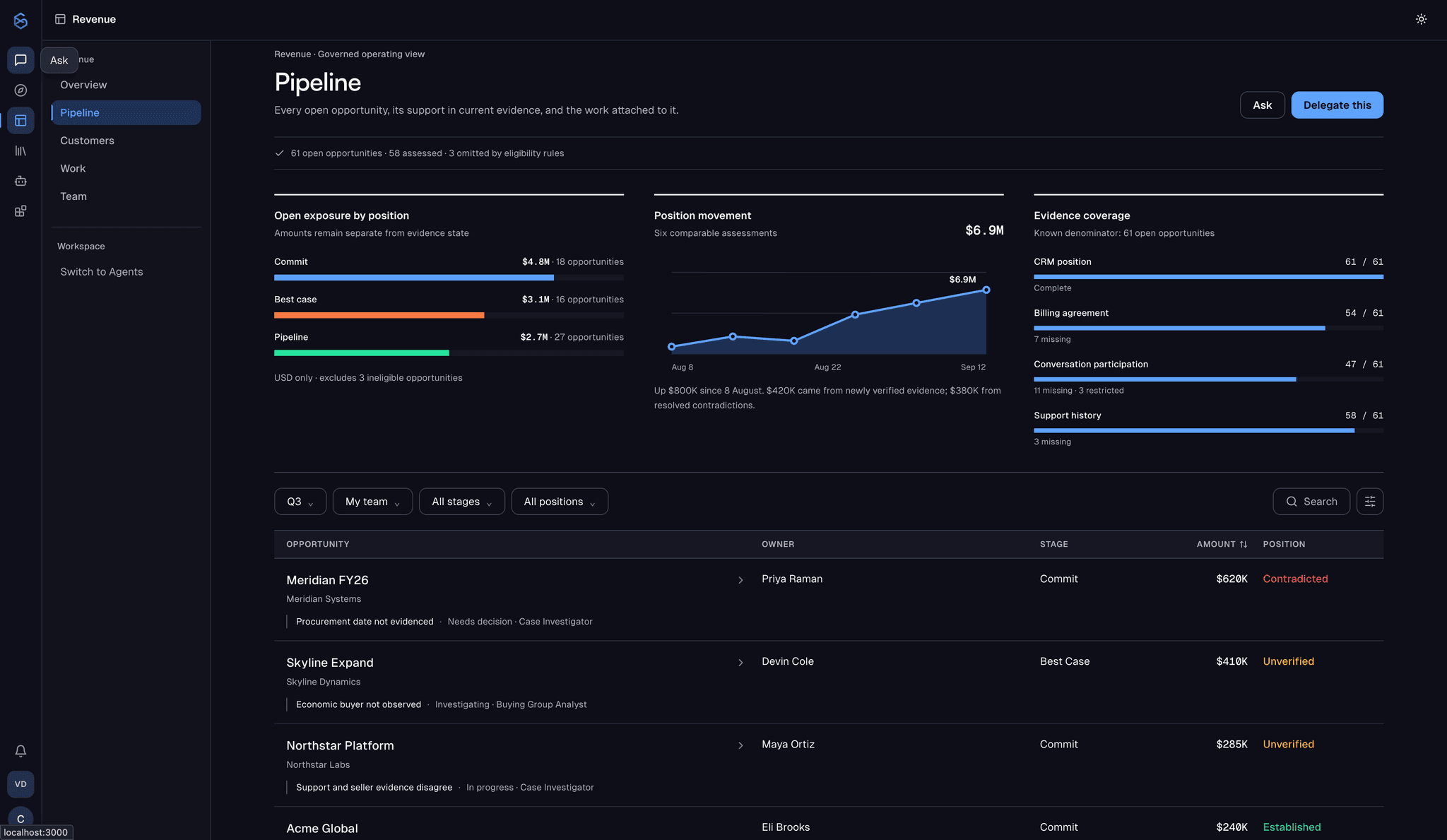
Forecast accuracy fails between systems.
A CRM forecast measures what the opportunity record says. Forecast accuracy improves when the team can test that category against the operational evidence surrounding the deal.
Measure forecast error consistently
A common starting point is absolute forecast error divided by actual revenue for the same period. Track the result by forecast date and category so a late, accurate forecast does not hide an unreliable early one.
Accuracy is the outcome metric. The useful work is identifying which evidence would have changed the forecast sooner.
Challenge commit with outside evidence
A commit deal can still carry a critical support escalation, declining product usage, a missing champion, a billing dispute, or a delivery dependency. Those signals often exist before anyone changes the opportunity.
Review exceptions instead of every deal. The question is not whether CRM is wrong; it is where current evidence no longer supports its category.
Preserve the forecast as it was known
Keep each historical forecast, the time it was submitted, and the source evidence available at that moment. Replacing yesterday’s value with today’s category makes forecast accuracy impossible to diagnose.
A defensible forecast explains both the number and why the team believed it at the time.